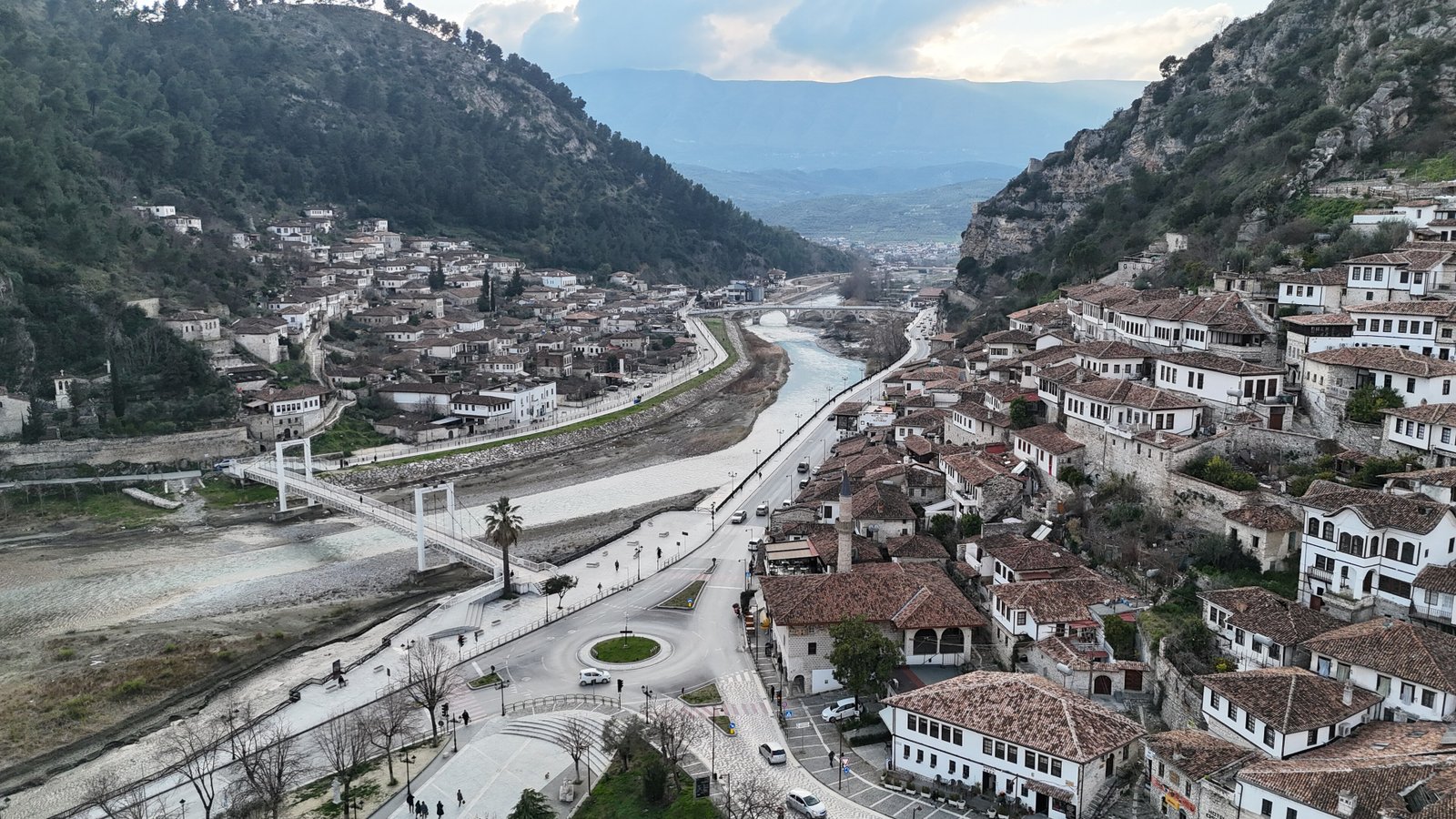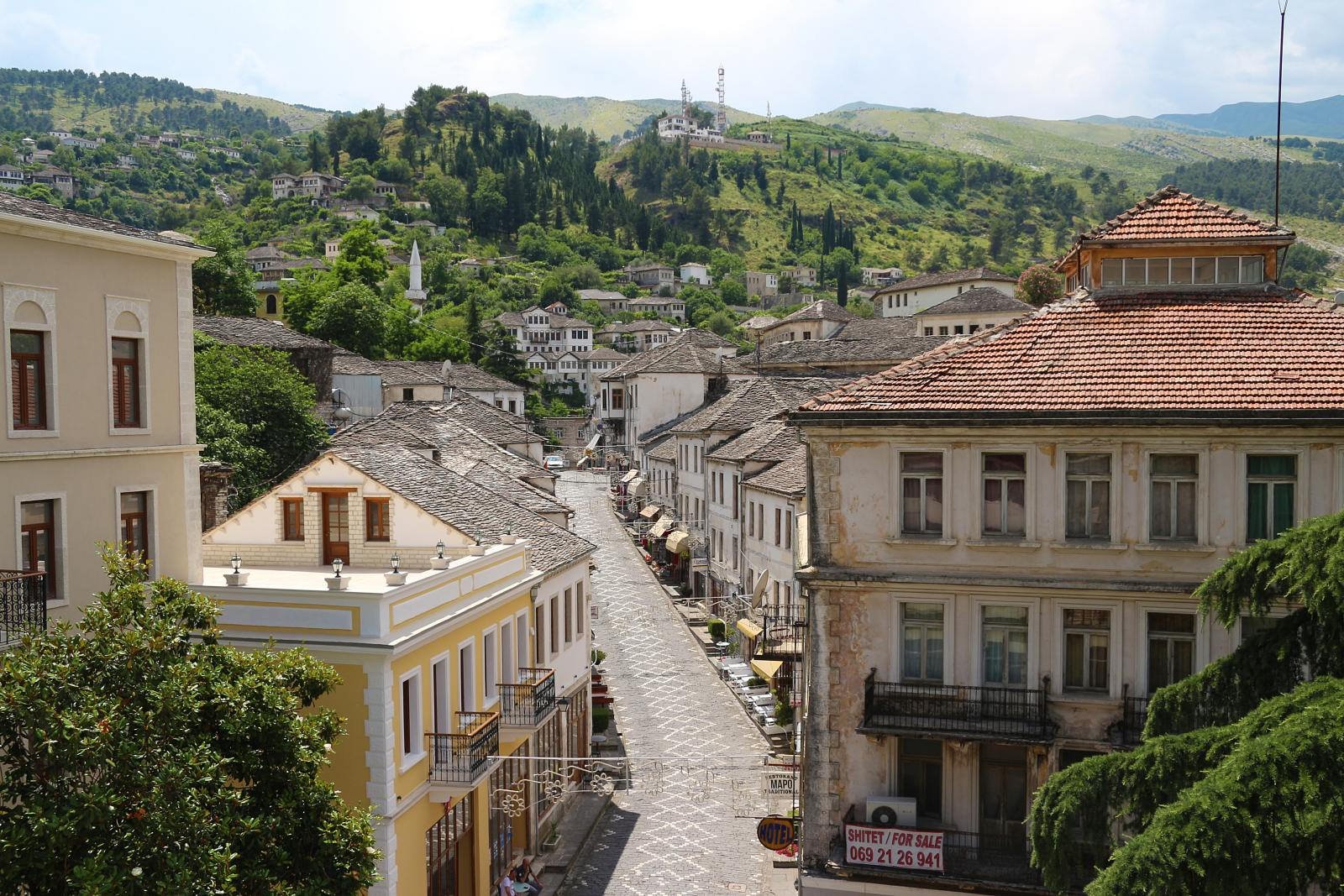
Tucked into a narrow valley between the Gjerë mountains and the Drino River in southern Albania, Gjirokastër is unlike anywhere else in the Balkans. Known as the City of Stone, its old town earned UNESCO World Heritage status in 2005 — jointly with Berat — for its extraordinary concentration of Ottoman-era architecture. Tall stone houses with slate roofs cascade down the hillside in every direction, their upper stories leaning out over lanes so steep they're more staircase than street.
But Gjirokastër is more than a living museum. It's a city of writers, warriors, and music — birthplace of Albania's most celebrated novelist Ismail Kadare, and of the communist dictator Enver Hoxha. The annual National Folk Festival held in its fortress brings together the finest traditional musicians from across the country. And just beyond the city limits lie some of Albania's most beautiful natural wonders.
Whether you're planning a day trip from Sarandë or spending a few nights to soak it all in, this guide covers the top 10 things to do, where to stay, what to eat, and how to get there.
Top 10 sights at a glance
1. Gjirokastër Fortress (Kalaja)
The fortress is the undisputed centerpiece of the city. Dating to the 12th century and dramatically expanded under Ali Pasha of Ioannina in the early 19th century, the Kalaja sits at over 300 metres above sea level and commands panoramic views across the entire valley. Inside the fortress walls you'll find the National Museum of Armaments — one of the largest weapons collections in the Balkans — as well as a captured US Air Force reconnaissance aircraft from the Cold War era, parked dramatically in the central courtyard.
The fortress also contains the Museum of National Struggle, which is housed inside a Cold War-era bunker complex dug into the rock. It documents Albania's resistance movements and the communist period, and offers a fascinating — if chilling — window into the country's 20th-century history.

The fortress also hosts the Gjirokastër National Folk Festival — held every five years in the castle courtyard — which draws traditional musicians, dancers, and craftspeople from across Albania and the Albanian diaspora. The next edition is one of the most anticipated cultural events in the region. Even outside festival time, the stage area and stone battlements are extraordinarily atmospheric at sunset.
2. The Old Bazaar (Pazari i Vjetër)
One of the best-preserved Ottoman bazaars in the entire Balkans, Gjirokastër's Pazari i Vjetër is a lively cluster of stone-fronted shops selling everything from hand-embroidered textiles to locally produced olive oil, dried herbs, and traditional copperware. The bazaar dates to the 17th century and retains much of its original layout — narrow lanes, arched doorways, and the rhythmic sound of craftspeople at work.
This is the best place in Gjirokastër to shop for genuinely local souvenirs. Look for hand-carved wooden objects, locally woven wool rugs (qilim), and artisan silver jewellery. Several of the café terraces here have extraordinary views up toward the fortress.
3. The Stone Houses of the Old Town
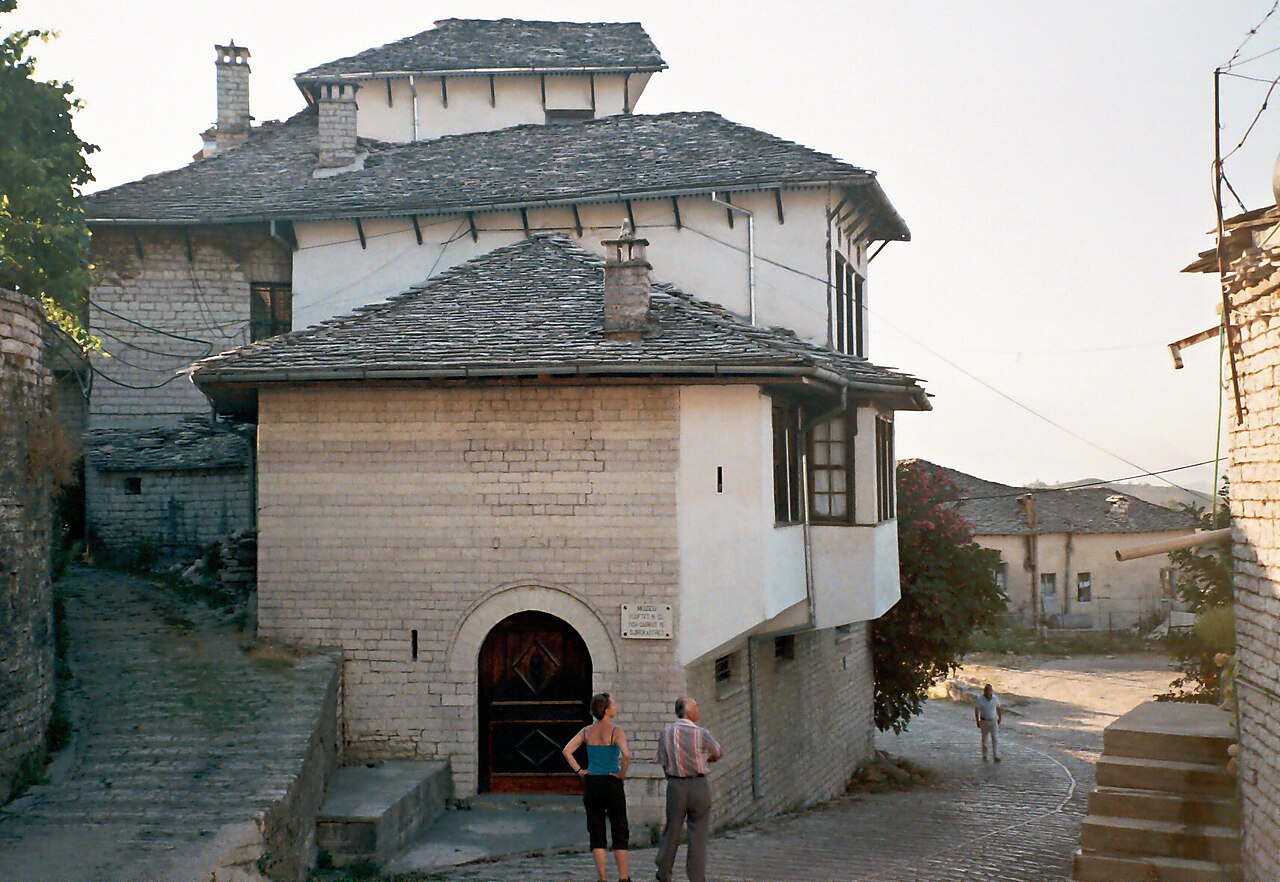
Gjirokastër's most defining feature is its extraordinary domestic architecture. The Ottoman stone tower houses (kullë) that line the steep lanes of the old town are unlike anything else in Albania — or indeed the Balkans. Typically four to six storeys tall, they are built directly into the hillside, with the lower floors used for storage and animals, and the upper floors for living. The distinctive grey slate roofs and thick stone walls were designed to be both beautiful and defensible.


Several of these historic houses are open to visitors. The Zekate House and the Skenduli House (now the Ethnographic Museum) are both outstanding examples of the interior life of a wealthy 19th-century Gjirokastër family, with elaborately painted wooden ceilings, carved plasterwork, and original furnishings intact.
4. The Ethnographic Museum (Skenduli House)
Housed in a perfectly preserved 18th-century Ottoman mansion, the Ethnographic Museum offers the best insight into traditional Gjirokastër domestic life. The building itself is extraordinary — a tall stone tower house with rooms arranged around a central courtyard, decorated with carved wooden ceilings and brightly painted interiors. The collection includes traditional costumes, household tools, weaponry, and documentation of local crafts.

5. The Birthplace of Ismail Kadare
Albania's most celebrated writer — and perennial Nobel Prize in Literature candidate — Ismail Kadare was born in Gjirokastër in 1936. His childhood home, a typical stone tower house in the heart of the old town, is open to visitors and contains a small museum dedicated to his life and work. Kadare's novel Chronicle in Stone is set in wartime Gjirokastër and remains one of the finest pieces of literature ever written about Albania — essential reading before any visit to the city.

6. Enver Hoxha's Childhood Home
Across the old town from Kadare's house stands the birthplace of Enver Hoxha — the communist dictator who ruled Albania from 1944 until his death in 1985, and whose brutal regime left a deep mark on the country. The house is open as a museum and offers an unvarnished look at both the man and the period. The juxtaposition of these two famous Gjirokastër natives — one of the world's great authors and one of Europe's most repressive rulers, born in the same small city — is one of the most thought-provoking aspects of visiting.
7. The Blue Eye (Syri i Kaltër) — day trip
About 25 kilometres from Gjirokastër lies one of Albania's most remarkable natural phenomena: the Blue Eye, a natural freshwater spring where impossibly clear, vivid blue water wells up from deep underground. The spring maintains a constant temperature of around 11°C year-round, and the water is so clear that you can see the bottom — where the rocks pulse with movement from the upwelling pressure beneath. The surrounding forest and Bistricë River valley make the drive and short hike in entirely worthwhile.
The Blue Eye is best visited early in the morning before tour groups arrive. Combined with a stop at the Antigonea archaeological site (ruins of an ancient Epirote city nearby), it makes an excellent half-day excursion from Gjirokastër.
8. The Old Bazaar Mosque & Teqe Mosque
Gjirokastër has several significant Ottoman mosques, of which the Bazaar Mosque (built 1757) and the Teqe Mosque are the most architecturally important. The Teqe Mosque, associated with the Bektashi religious order that has deep roots in southern Albania, is a particularly serene and beautiful building set in a garden of old plane trees.

9. Saint Sotir Orthodox Church
Gjirokastër has a significant Orthodox Christian heritage alongside its Muslim majority, and the Church of Saint Sotir is one of the most beautiful religious buildings in the city. Built in the 19th century, it contains fine Byzantine-influenced frescoes and offers a quiet contrast to the more visited attractions above. The Christian quarter (Palorto) around it has its own distinct architectural character.
10. The Stone Bridge & Gjirokastra Panorama
For the classic panoramic photograph of Gjirokastër — the one you'll see on every travel article and postcard — head to the stone bridge at the base of the old town just before sunset. From here, the entire sweep of the old city rises above you: slate rooftops, stone walls, tower houses clinging to the hillside, and the great fortress above. It is one of the most photogenic urban views in all of the Balkans.

How to get there
Gjirokastër has no airport. The nearest airport is Tirana International (TIA), roughly 3 hours away. The drive is scenic and manageable by rental car — the SH4 road south passes through beautiful mountain terrain. Furgon (shared minibus) services operate from Tirana's southern bus terminal and from Sarandë regularly throughout the day.
Where to stay in Gjirokastër
Gjirokastër's old town has a growing number of atmospheric guesthouses and boutique hotels housed in converted Ottoman stone houses. Staying inside the old town itself — rather than in the newer lower city — makes a massive difference to the experience. Waking up to the sound of cobblestones underfoot, stone walls glowing in morning light, and the fortress framed in your window is simply not replicable from a modern hotel down the hill.
Popular options include Guesthouse Kotoni, Hotel Kalemi 2, and Stone City Hostel, all within the UNESCO-protected zone. Prices are very reasonable by European standards — expect to pay between €35–90 per night for a double room with breakfast in a characterful stone-house guesthouse.
Where to eat
Gjirokastër's cuisine is classic southern Albanian — hearty, olive-oil-rich, and deeply flavourful. The old bazaar area has the best concentration of traditional restaurants. Look for tavë kosi (oven-baked lamb with yoghurt), byrek (flaky pastry with cheese or spinach), and grilled meats served with locally grown vegetables. The local olive oil — from the terraced groves on the valley slopes — is exceptional.
Restaurant Kujtimi in the old bazaar is consistently recommended for its traditional menu and terrace views. Taverna Fantazia and Restaurant Lili are also popular with both locals and visitors. For coffee and cake in Ottoman-era surroundings, the café terraces in the bazaar area are hard to beat.
Day trips from Gjirokastër
Gjirokastër makes an excellent base for exploring the surrounding region. In addition to the Blue Eye (30 minutes), the following day trips are all highly recommended:
- Antigonea Archaeological Site — ruins of an ancient Epirote city from the 4th century BC, with panoramic valley views
- Përmet and the Vjosa River — a beautiful drive through mountains along one of Europe's last wild rivers
- Sarandë and Butrint — the Albanian Riviera's main town plus the UNESCO-listed Butrint ruins, about 1.5 hours away
- Skrapar hot springs — natural thermal waters in a remote mountain setting, best reached by car
Practical tips for visiting Gjirokastër
- Best time to visit: April–June and September–October. Summer (July–August) is very hot and busy; winter can be cold but the city is hauntingly beautiful in mist.
- Wear comfortable shoes: The cobbled streets are steep and slippery when wet. Proper walking shoes are essential.
- Cash: Many guesthouses and smaller restaurants prefer cash. There are ATMs in the lower new town.
- Getting around: The old town is entirely walkable — and indeed, most of it is inaccessible to cars. Plan on a lot of uphill walking.
- Allow at least one overnight: Gjirokastër deserves more than a day trip. The atmosphere at dusk and dawn, when tour groups have gone, is something else entirely.
"Walking the streets of Gjirokastër at dusk, with the fortress silhouetted against an orange sky and the sound of the call to prayer echoing off stone walls, is one of those rare travel experiences you simply can't manufacture."
Gjirokastër is not always easy to reach, and that is part of its magic. It rewards the effort with some of the most atmospheric urban walking in Europe, extraordinary history, and a genuine sense of a city that time has treated kindly. Of all Albania's destinations, it is perhaps the one that most consistently exceeds expectations.
Planning a trip to Gjirokastër?
Browse verified hotels, guesthouses, restaurants, and tour operators in Gjirokastër.
Browse Gjirokastër listings →